Data Analytics vs. Business Intelligence: Understanding the Tools That Turn Data Into Decisions
In today's business landscape, "data-driven" is the mantra. But amidst the buzzwords, two terms are often used interchangeably—and incorrectly: Data Analytics and Business Intelligence (BI). While deeply interconnected, they serve distinct purposes. Understanding this difference is key to building the right team, choosing the right tools, and ultimately, extracting the right insights from your data.
Think of your data as a vast, unexplored ocean.
Business Intelligence (BI) is your navigation dashboard.
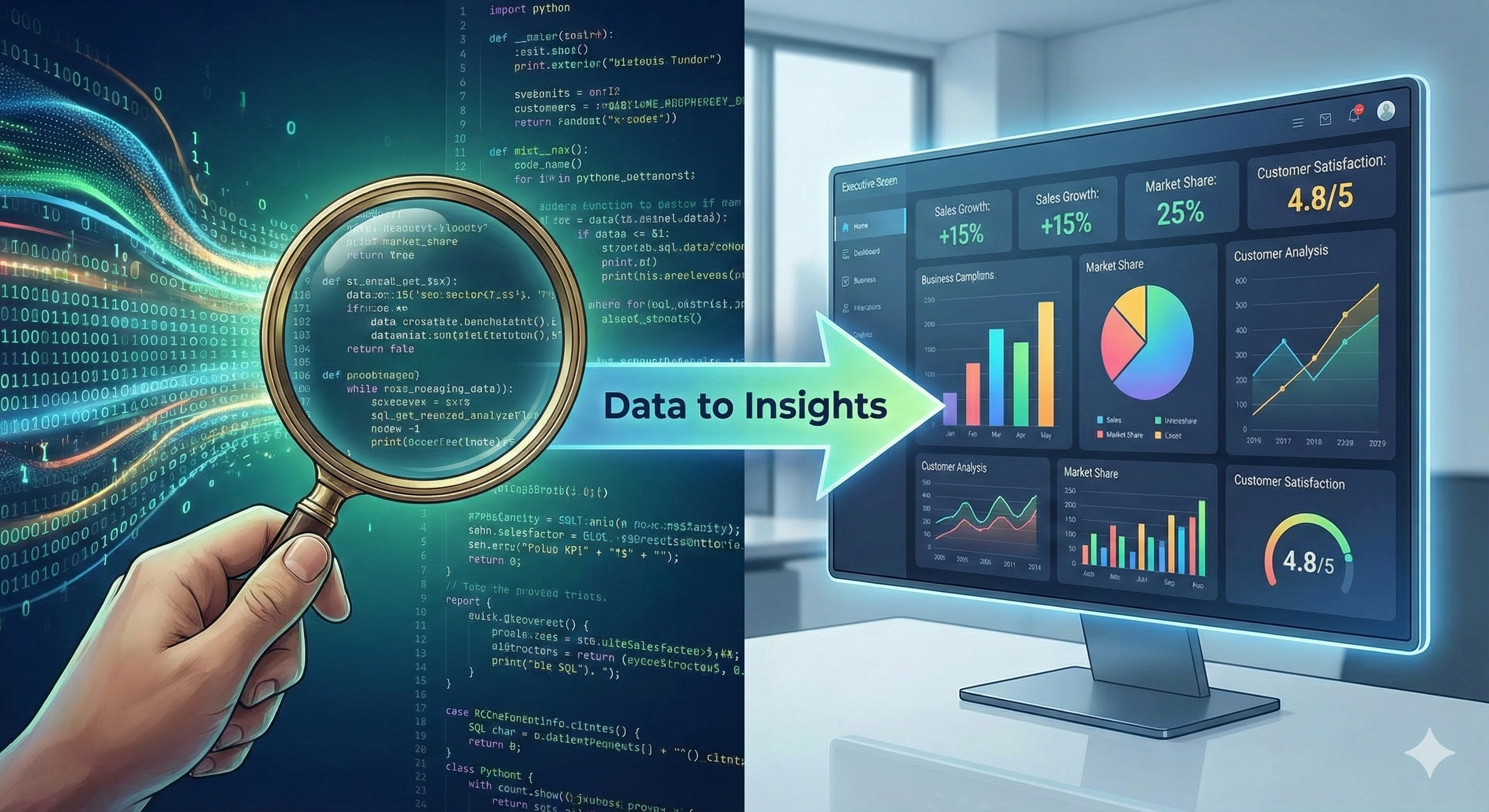
BI is primarily descriptive and diagnostic. It answers the questions: "What happened?" and "Why did it happen?" BI tools aggregate historical data from various sources (sales software, CRM, marketing platforms) and present it in digestible formats: interactive dashboards, standardized reports, charts, and key performance indicators (KPIs). A CEO might glance at a BI dashboard to see that Q3 sales in the Southwest region dropped by 15% compared to last year. A marketing manager can diagnose that a specific campaign underperformed. BI is about monitoring health, tracking against goals, and understanding past performance to inform present decisions. It's reactive, looking backward to explain the present.
Data Analytics is your deep-sea research submarine.
Analytics is predictive and prescriptive. It uses statistical analysis, machine learning, and data mining to answer: "What is likely to happen?" and "What should we do about it?" While BI tells you sales dropped, Data Analytics digs into the "why" at a granular level and models future scenarios. An analyst might use clustering algorithms to segment customers who are likely to churn, build a model to forecast inventory demand for the next holiday season, or run simulations to prescribe the optimal price for a new product. It's proactive, using the past and present to model and influence the future.
The Synergy: A Continuous Intelligence Cycle
These disciplines are not rivals; they are sequential stages in a powerful intelligence cycle.
BI provides the alert: The dashboard flags an anomaly—website conversion rates have dipped.
Analytics investigates the cause: Analysts dive into user session data, A/B test results, and funnel metrics to discover that a recent site update caused slower load times on mobile devices.
Analytics models the solution & predicts outcome: They test fixes and predict that optimizing images will recover the lost conversions and potentially increase them by 5%.
BI tracks the result: The fix is implemented, and the BI dashboard is used to monitor the conversion rate KPI in real-time, confirming the prediction.
Implementing Your Strategy:
Start with BI to get a single source of truth and visibility into your operations. This solves the problem of scattered spreadsheets and conflicting reports. Once you have clean, reliable data flowing into dashboards, invest in Analytical capabilities. This could be upskilling existing staff or partnering with data scientists.
By leveraging BI to understand your current state and analytics to foresee and shape your future state, you move from simply reporting on history to actively writing the next chapter of your business growth.