The Engine Behind Modern SaaS: Multi-Tenant Architecture Explained
Introduction: The Secret Sauce of Cloud Software When you log into a modern cloud application, you are experiencing the same seamless interface as thousands of other users across the globe. Yet, your dashboards, your configurations, and most importantly, your data, are completely unique to you.
How is this possible without building a separate application for every single customer? The answer lies in the foundational architecture of modern software: Multi-Tenancy.
1. What Exactly is Multi-Tenancy? In software engineering, a "tenant" is a group of users who share common access with specific privileges to the software instance (usually, a tenant equals one customer or company).
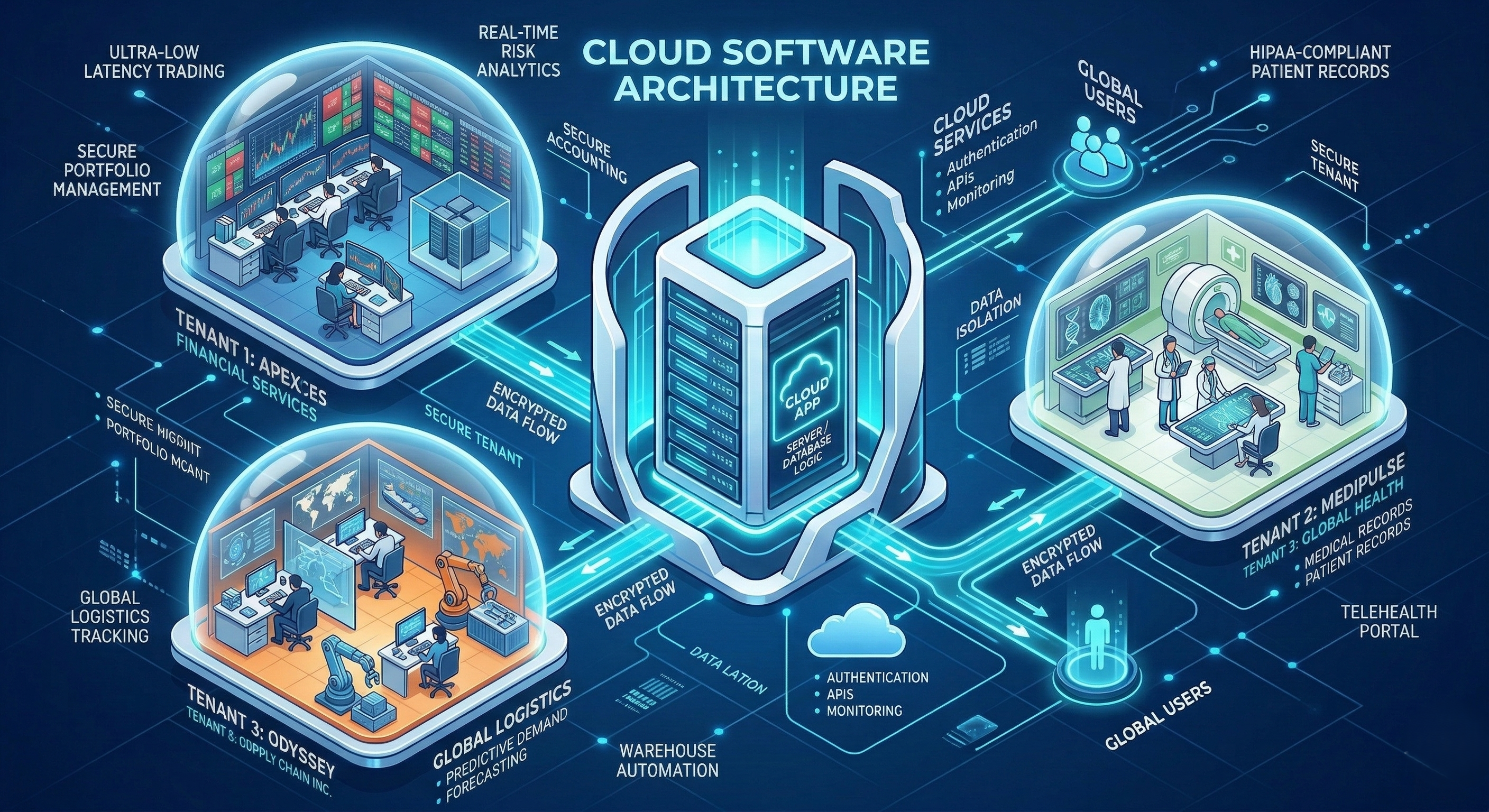
Multi-tenant architecture means that a single instance of a software application—and its underlying database and hardware—serves multiple tenants simultaneously.
2. The Apartment Building Analogy The easiest way to understand this is through real estate:
- Single-Tenant (On-Premise): Imagine buying a standalone house. You have your own plumbing, your own electricity, and your own security. It’s highly customized, but you bear 100% of the maintenance costs and responsibilities.
- Multi-Tenant (SaaS): Imagine a luxury high-rise apartment building. Everyone shares the core infrastructure—the elevators, the central heating, the foundation. However, you have the key to your specific apartment. No one else can enter your space, and you can arrange your furniture (configurations) however you like.
3. Why Multi-Tenancy is the SaaS Gold Standard Building software this way isn't just a technical preference; it delivers massive business advantages to the end-user:
- Cost Efficiency: Because the underlying computing resources (servers, databases) are shared, the cost of running the software is distributed. This allows vendors to offer powerful enterprise-grade tools at a fraction of the cost of custom-built software.
- Instant, Universal Updates: When our engineering team pushes a new feature or a critical security patch, we only have to update one central application. Every tenant in the "building" gets the upgrade instantly, without lifting a finger.
- Rapid Scalability: Onboarding a new client doesn't require setting up new hardware or spinning up a new software instance. We simply provision a new secure "apartment" in the existing architecture.
4. The Big Question: Is My Data Actually Safe? When businesses hear "shared database," they often worry about data leaking between companies. This is where rigorous engineering comes in.
In a properly built multi-tenant system, data is strictly isolated using Logical Separation. Every single piece of data is tagged with a unique "Tenant ID." The application’s code acts as an aggressive bouncer; when User A logs in, the system completely blinds them to any data that doesn't perfectly match User A's Tenant ID. At the database level, mechanisms like Row-Level Security (RLS) or separate database schemas ensure that cross-tenant data leakage is structurally impossible.