
How We Engineer SaaS to Handle 10 to 100,000 Users Instantly
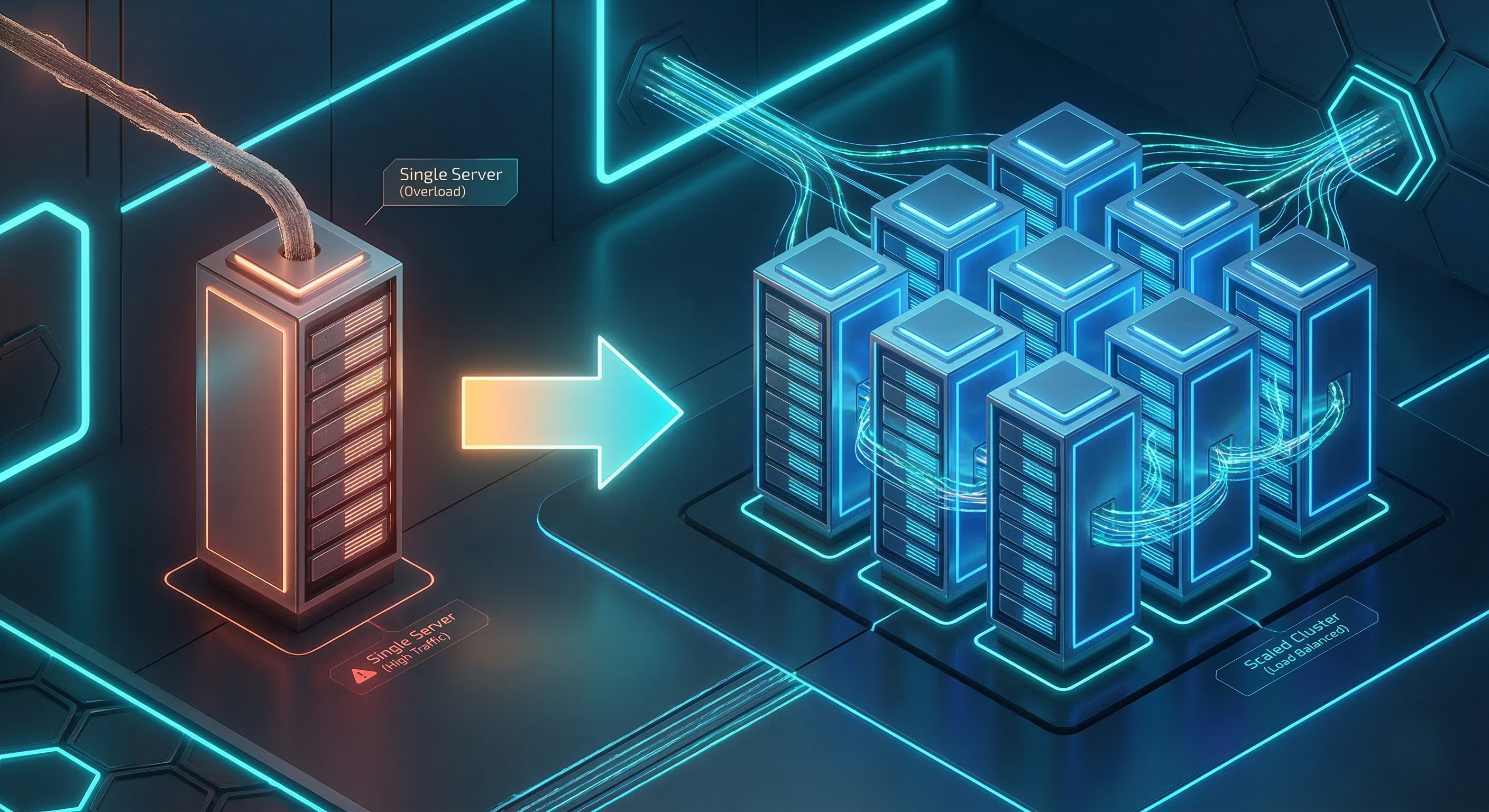
The "Hug of Death" Imagine your business launches a highly anticipated marketing campaign. Traffic floods in, users are signing up by the second, and then... the screen goes blank. The server crashed. In the tech world, this is known as the "hug of death"—when your software becomes so popular that it destroys its own infrastructure.
For enterprise businesses, downtime during peak hours equals lost revenue and damaged trust. This is why building software that simply "works" isn't enough. It must be designed to scale. At Cloudvexa, scalability is built into the foundation of our architecture from day one.
1. Vertical Scaling (Scaling Up) In the early days of a product, the easiest way to handle more users is to buy a bigger machine. This is called Vertical Scaling. If your server is running out of memory, you add more RAM. If it's processing too slowly, you upgrade the CPU.
- The Problem: There is a physical limit to how big a single machine can get. Eventually, you cannot buy a bigger server, and upgrading it often requires taking the system offline (downtime). Vertical scaling is a short-term fix, not a long-term strategy.
2. Horizontal Scaling (Scaling Out) Instead of building one giant server, what if you linked dozens of smaller servers together to share the load? This is Horizontal Scaling. When traffic spikes, the system simply adds another server to the pool. A piece of technology called a "Load Balancer" acts like a traffic cop, directing new users to the server with the most available capacity.
- The Advantage: There is virtually no limit to horizontal scaling. It is the secret behind how platforms like Netflix and Google handle millions of concurrent users without breaking a sweat.
3. Auto-Scaling: The Cloud’s Superpower In traditional data centers, adding a new server took weeks of ordering hardware. In the cloud, it takes milliseconds. Modern SaaS applications use Auto-Scaling. We set specific rules in our infrastructure: “If CPU usage hits 80%, automatically spin up three new servers.” When the traffic rush is over (say, at midnight), the system automatically powers those extra servers down. You only pay for the exact computing power you use, keeping costs incredibly efficient.
4. The Database Bottleneck You can have all the web servers in the world, but if your database can't handle the traffic, the whole system grinds to a halt. Scaling databases is notoriously difficult because data must remain perfectly consistent across all users. This is why we rely on robust, enterprise-grade relational databases like PostgreSQL. By utilizing techniques like "Read Replicas" (creating copies of the database strictly for users to read from), we take the pressure off the main database, ensuring lightning-fast load times even during massive traffic spikes.